



























Why Don’t Employees Use the Spaces Built for Them?
Employers have invested heavily in better offices in recent years. You’re probably familiar with terms such as collaboration spaces, quiet work areas and employee wellbeing spaces, to name just a few. However, the pattern of whether these spaces are used remains uneven. Some are in high demand, while others often sit empty or underused, particularly in today’s more flexible working environment.
Does that mean the workplace design was a failure? No.
Gallup’s latest research shows that most employees in remote-capable roles continue to work under hybrid arrangements, while WFH Research indicates that office attendance remains concentrated in the middle of the week. At this point, uneven office space utilisation and hybrid work are closely linked realities.
Is the Office Offering Something Employees Need That Day?
This is arguably the most important question.
Many employees now know they can perform certain tasks just as effectively from home. Stanford University’s research on hybrid work found that employees working from home two days per week were just as productive and just as likely to receive promotions as their fully office-based peers, while resignation rates fell by 33%. Add the reality of commuting in Hong Kong, where many employees travel considerable distances between residential districts and major business centres each week, and the office needs to offer something more than an attractive workspace.
That is why underused office space is not always a workplace design failure.
Sometimes employees make rational choices.
If they can focus better elsewhere, join video calls more easily, or move through the working day with less friction at home, they are likely to save the commute for work that benefits from greater collaboration, face-to-face interaction or time-sensitive decision-making.
Do People Understand What Space Is For?
This is perhaps the most surprising aspect.
Much low workplace utilisation comes down to clarity.
Microsoft found that “38% of employees working under hybrid arrangements say their biggest challenge is knowing when and why to come into the office.” 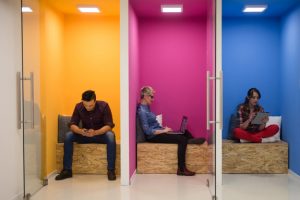
The same issue often appears within the workplace itself. A space may be well designed, but if employees are unsure what it is for, who it is intended for, or when it makes sense to use it, they tend to fall back on familiar habits.
Picture a new focus room, quiet lounge or hybrid meeting pod. Was it introduced with a clear purpose, or was it simply added to the floor plan and left for employees to work out for themselves?
If nobody explains how space fits into the working day, it can feel awkward for employees to make use of it.
Does the Space Fit Real Work, Not Idealised Work?
It is easy to design an idealised vision of work. It is much harder to design around what people actually do between 9am and 6pm.
Microsoft has highlighted that workplaces need a mix of quiet spaces, collaboration spaces and touchdown spaces.
Gallup also reports that some of the biggest challenges associated with hybrid work include having access to the right tools and resources to work effectively, as well as impaired collaboration and disrupted work processes.
Remember: employees do not use space simply because it looks good. They use it when it helps them get something done. If a small room does not feel private enough for a sensitive call, it will go unused. If a collaboration space looks attractive but is awkward for hybrid meetings, employees will avoid it.
Effective workplace planning and office space utilisation work best when they follow real tasks, not idealised ones.

Is There Too Much Friction Built Into the Experience?
Sometimes the space itself is fine, but the challenge comes down to practical considerations.
Is the room easy to find?
Can employees tell whether it is available?
Does the booking process take too long?
Does the screen work the first time?
Can someone step in for ten minutes without making it feel like a whole production?
These questions may sound small, but they can influence behaviour very quickly.
Most of us are familiar with how this type of friction can frustrate us and discourage us from using something that might ultimately help us work more effectively.
Returning to Gallup’s research on hybrid work, employees consistently value better work-life balance, more efficient use of their time and greater flexibility over when and where they work.
The key lesson is simple: if you are going to invest in new workplace amenities and facilities, make them easy to use.
What Are Team Habits Telling People to Do?
Something that is often overlooked is that work practices are frequently shaped by team norms rather than wider organisational culture – and there is an important distinction between the two.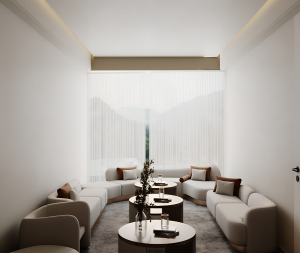
For example, if a manager regularly books a project room for team working sessions, others are likely to follow.
On the other hand, if a team consistently defaults to desk-based calls and quick conversations between desks, nearby enclosed spaces may never become part of their regular routine.
Hybrid work patterns have made this particularly evident.
WFH Research found that office attendance is significantly lower on Mondays and Fridays than it is from Tuesday to Thursday.
Stanford University has highlighted the same coordination challenge from a different perspective: when employees choose their own office days, attendance tends to cluster in the middle of the week, leaving office space underutilised at either end of the week.
Similar attendance patterns can be observed across many Hong Kong workplaces, where office occupancy is often concentrated in the middle of the week as employees work under hybrid arrangements.
In many cases, this reflects a scheduling challenge more than a workplace design issue.
Do Employees Trust the Experience?
To clarify, do employees trust that they will find a suitable space when they need one?
Do they trust that a quiet work area will actually be quiet?
Do they trust that a hybrid meeting room will include remote participants properly?
Do they trust that using a focus booth, lounge or employee wellbeing space will feel natural rather than awkward?
“If a workplace amenity is underused, it does not automatically mean the investment was unsuccessful. More often, it reflects a gap between how the space was designed to be used and how employees actually work. By combining office space utilisation data with employee feedback and clear communication, organisations can identify whether the issue is awareness, trust, timing or suitability.”
Phil Oram, Regional Director, Crown Workspace
There is not always clear evidence to explain this behaviour.
However, workplace research in Hong Kong suggests that employees and employers do not always share the same expectations about the role of the office. Morgan McKinley found that while many organisations in Hong Kong are encouraging greater office attendance, a significant proportion of employees continue to prefer hybrid working arrangements. When expectations are not aligned, employees can become less certain about when, why and how they should use the workplace.
This highlights a broader challenge for workplace leaders. Clear communication, consistent workplace guidance and a strong employee experience are often just as important as workplace design itself when it comes to helping employees make effective use of office space.
How Do You Improve Underutilised Office Space Without Overreacting?
Start with workplace utilisation data.
Booking patterns and occupancy trends are a good place to begin, as they provide the foundation for understanding how spaces are actually being used.
Then compare this information with employee feedback and insights from managers.
Ask some simple but important questions:
- Who is this space designed for?
- What type of work is it intended to support?
- Most importantly, what is preventing employees from using it?
Then act on what you learn.
Provide teams with straightforward guidance on when and how particular spaces should be used.
Develop workplace norms around shared team days and activities that genuinely benefit from in-person collaboration.
If the technology is creating friction, fix it.
To be candid, there will be situations where a space needs to be redesigned. However, there are also many cases where a space simply requires clearer communication, better workplace guidance or stronger team habits to support its intended use.
Facilities and Workplace Managers, along with senior leaders, should evaluate workplaces based on whether they support the work that matters most.
Don’t allow workplace utilisation to become just another tick-box exercise within an office fit-out project.
Looking to Improve Your Office Space Utilisation?
Whether you are planning an office relocation, workplace upgrade or simply want to understand how effectively your office space is being used, our team can help.
Get in touch with one of our workplace experts today.
We combine specialist workplace expertise, office relocation and workplace design experience, together with proprietary technology, to create workplaces that work better for people.
Related stories

Hybrid work can leave offices crowded on peak days and empty on others. Learn how Hong Kong businesses can optimise office space, capacity and utilisation.

Explore sustainable office solutions for Hong Kong SMEs, from workplace design and furniture refurbishment to reuse and recycling, while supporting ESG goals.

Learn how to manage security, compliance and business continuity risks during a high-security office relocation in Hong Kong, from sensitive assets to critical IT systems