



























How to create a circular office, with no downtime
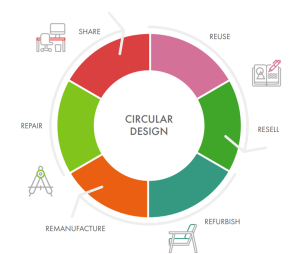
The circular economy is centered around designing out waste and pollution, keeping resources in use for as long as possible and regenerating our natural systems. But how do we translate that to create a ‘circular workplace’? And what does that look and feel like? Whilst every organization will answer that differently, the message is simple – use less, share more, and make sure that what you use has been sourced sustainably, has the potential to be reused, repurposed or recycled, rather than simply becoming waste.
The challenge is how we implement those principles across offices, warehouses, manufacturing sites and meeting rooms – which all express a business’s culture and values whilst having the potential to deliver carbon reductions and contribute significantly to an organization’s net zero journey.
According to our research, furniture and laptops for as few as 100 employees, typically represents around 30 tons of embodied carbon, the same as powering 44 homes for a year. There’s no universal blueprint for tackling this and, to be clear, the primary objective of a circular workplace doesn’t have to be environmental, it can also provide office procurement cost savings too – as well as creating community benefits and social value.
Where poorly planned or managed, transitioning to a circular approach can be disruptive to daily office life – but it doesn’t have to be that way. In this guide we provide a simple six-step guide on how to do it.
A circular workspace is entirely compatible with business continuity. When the process is structured correctly, organizations can maintain full functionality while reducing environmental impact and long‑term cost – and having a positive impact on society.
Throughout the process, there are three pillars you should always keep in mind.
- A precise understanding of what you already own
- A phased plan aligned with operational rhythms
- Logistics, storage and communication working in sync
Let’s begin.
- Audit what you have, and what you need
First things first, you need clarity. Most organizations don’t have a complete picture of their assets, how they’re used or what condition they’re in. A structured audit changes that. It involves building a detailed inventory of every item, furniture, fixtures, equipment, and grading each piece so you can determine what can be reused immediately, what can be refurbished, and what is genuinely redundant – and whether that can have a second life somewhere else or is at true end of life.
This is also where hidden value emerges. Many organizations discover that a significant proportion of their existing furniture can be renewed at a fraction of the carbon and cost of buying new furniture.
Our asset management and lifecycle tool, LENS, supports this stage by giving teams a live, accurate view of their assets and helping them map what they have, its make-up, condition and whereabouts. This can then be assessed against what they will need, especially as hybrid working patterns evolve, improving decision making, enabling reuse and reducing cost and wastage. Storage becomes a strategic tool here: by categorizing assets into short, medium and long‑term needs, organizations can move items offsite without interrupting day‑to‑day operations.
This isn’t just marketing language either, The Ellen MacArthur Foundation is explicit in stating asset visibility is the core of circularity, while the UN Environment Program says refurbishment and reuse are among the most effective ways to cut carbon in the built environment.
- Create a transition plan
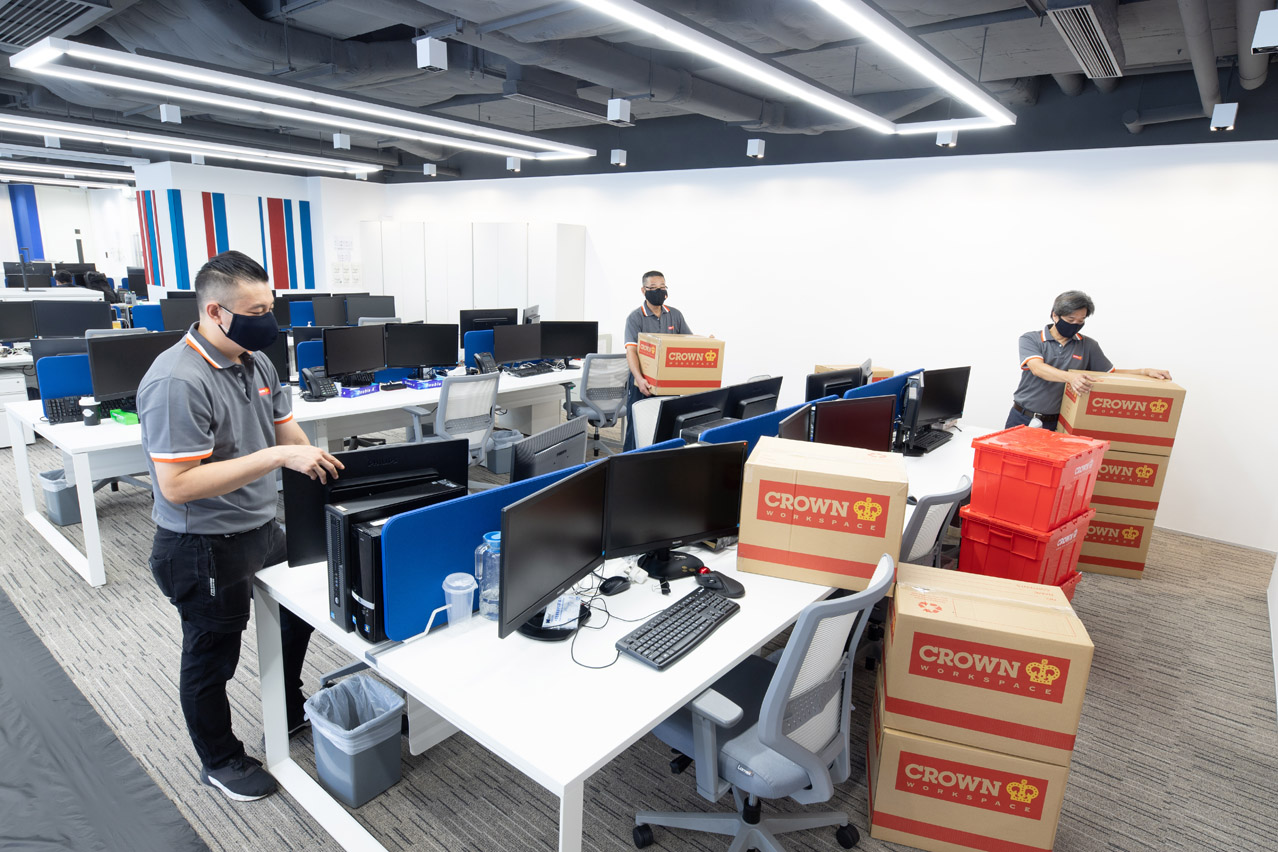
Once the audit is complete, the management information is available to plan for more circular outcomes by aligning circular economy thinking into part of workspace change planning. The principle is simple: each phase is completed before the next begins, and storage is used to separate removal, refurbishment and reinstallation. This is how downtime is eliminated.
One advantage of our approach is that we manage this through single‑point project oversight, coordinating logistics, storage, refurbishment and installation so that every step is synchronized and double handling is avoided.
As an example, we worked with Kings College London to drive a circular transformation in a relocation and fit-out as part of a broader strategy to modernize its estate. With sustainability central to the university’s objectives, and with Crown Workspace’s support, the project adopted a circular economy model focused on reuse, refurbishment, and responsible redistribution of assets. Using LENS, we audited eight buildings, refurbishing and restoring over 430 items of furniture in our London Renew Centre. We managed over 30 concurrent reuse projects across multiple university sites and redistributed over 1,000 furniture items across the estate. In total, 72.84% of all furniture used came from existing university assets, exceeding the original 70% reuse target. These efforts achieved embodied carbon savings equivalent to powering 279 homes for an entire year.
As a pioneer in circular economy thinking, we recognize our role is not just to innovate but to share our knowledge and help drive the circular agenda much more widely. We do this, not only through our case studies, but through documents like this and our UKI white paper: Creating circular workspaces produced out of a Workplace Trends collaboration with ITV and JLL, a video of which is available here.
- Maintain brand and design continuity
A common concern we hear from clients is that by reusing furniture they will dilute brand identity or lead to a mismatched aesthetic.
In practice, high‑quality refurbishment allows organizations to maintain complete design continuity. Furniture can be color‑matched, re‑upholstered and refinished to align with brand guidelines, often more consistently than when new items are purchased ad hoc.
Our refurbishment teams in our dedicated global Renew Centres specialize in restoring assets to a like‑new standard, ensuring that circular choices look intentional, cohesive and premium. This is where circularity becomes visible: a workspace that reflects your organization’s identity while delivering significant positive environmental, financial and social impacts.
- Manage employee expectations
Circular transitions succeed when employees understand the purpose behind them. Clear communication from the outset, supported by visual previews, timelines and opportunities for feedback, helps employees feel part of the process rather than subject to it. This is something we’re always upfront about when we start scoping out any office design project: we recommend taking time to engage with employees to understand their wants and needs and show them the previews we create for you. Above all, listen.
The problems a deficit of transparency can bring about are highlighted at the highest levels. 2024’s World Economic Forum talk on “Building trust through transparency” repeatedly mentioned that transparency from large corporates is one of the strongest drivers of trust in sustainability initiatives. In other words, when you’ve done well, talk about it. However, when you haven’t delivered, you should also talk about it. This way both internal and external audiences take you seriously and don’t view what you’re doing as pure optics exercise. This same principle applies with regards to your own staff: clarity builds confidence.
- Use logistics intelligently
Behind the scenes, logistics is what makes a zero‑downtime transition possible. It is also an area where costs can quietly escalate if not managed carefully. Coordinating removal, storage, refurbishment and delivery through a single provider reduces unnecessary transport, avoids double handling and keeps the project on schedule.
Circularity is both a sustainability strategy as well as a logistics strategy. Understanding the assets that facilitate this (storage first and foremost) is a pre-requisite for any successful circular office. So a reliable logistics partner with 1. Owned warehouses and 2. Dependable, skilled staff is something you’ll almost certainly need to pull it off.
- Track the impact, i.e. “did it work?”
A circular office must be measurable. Tracking impact is essential for internal reporting, external disclosures and long‑term planning. Organizations should monitor carbon savings from refurbishment, the volume of waste diverted from landfill, employee satisfaction throughout the transition, and the financial value recovered from existing assets.
There is also growing opportunity to connect workspace circularity with information‑management circularity. Our broader ecosystem, through our sister-company at Crown Information Management, supports secure IT equipment upcycling and responsible disposal, helping you reduce Scope 3 emissions across both physical and digital estates.
Want to build a circular office, or simply get some transparent guidance on how to get started in simple ways? Get in touch with one of our experts today!
What makes an office green?
Including expert insight on greenwashing and greenhushing in office design and planning, this guide helps workplace leaders embed credible sustainability into built environments and communications.
Beyond greenwashing: What makes an office "sustainable"?
Related stories

Six countries, 1200 respondents: Our new 2025 research survey suggests open-office orthodoxy is making the post-COVID workplace less palatable than ever. What can be done about this?

On Monday morning, leaders emails: the lease is ending and the office will move. The lease is ending. The office will move. Options are under review; details are TBD. Weeks pass. Rumours fill the gap. People start asking questions. Will the new office be farther away? Will there be enough desks? Will there be fewer […]

For many organizations, your office is seen as a cost of doing business. Rent, furniture, fixtures and equipment are written off over time and eventually replaced. But what if we started treating offices differently? What if we viewed them as assets that can hold value, adapt to change and contribute to long-term resilience? This shift […]
Sustainability is everywhere in workplace design. From rooftop gardens to recycled coffee cups, offices are quick to showcase their “green” credentials. But how much of this activity delivers genuine environmental impact, and how much is simply “greenwashing”?