




























The five costliest mistakes made when designing a new office
Designing a new office is a big project, especially in today’s hybrid-working (and very cost-conscious) environment. This means every design decision needs to deliver real value, or risk leaving expensive space empty. For Facilities Managers and workplace leaders, avoiding costly missteps during an office fit-out or relocation can save significant money and headaches later.
So what are the five most expensive mistakes in new office design, why do they happen, and most importantly, how can you avoid them?
1. Designing a new office without any data: wasted space = wasted money
Mistake: Launching an office design based on intuition without data-driven planning about how your people work.
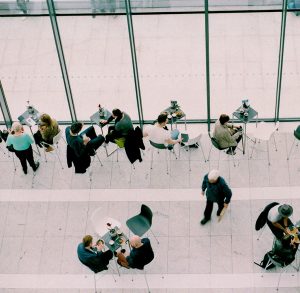
Why is it costly? Real estate is expensive, so unused space is wasted money. Many firms still design offices assuming full attendance or using outdated ratios, only to find much of the space sits idle. American companies waste an estimated $150 billion annually on underutilized office space (roughly 40% of all office space empty at any time isn’t being used). Even in the U.K., office attendance has been hovering under 50% post-pandemic, meaning a traditional 1:1 desk-per-person layout will leave rows of empty workstations on most days, all incurring running costs.
How to avoid it: Before signing off floorplans, gather occupancy counts, meeting room usage, peak vs. off-peak attendance, and how different teams use space. For example, a 50,000 sq ft HQ might truly need only 30,000 sq ft if hybrid schedules mean half the staff are remote on any given day.
If it’s practical you can gather space-utilization data from sensors. If that’s too high an investment, surveys also work. Then put first designs together which meet those patterns. You’re planning space around real requirements here and optimizing now rather than after-the-fact.
2. Starting the office design process and leaving your employees out of the conversation
Mistake: Making design decisions without employee feedback (we’ve talked about this before, as have Forbes and other outlets, so it’s an increasingly important point of contention). This is either to save time or because they assume, they already know what staff want.
Why it’s costly: This all but assures you’ll ignore the needs of the people who use the office because nobody bothered to ask them. The result can be lower attendance than forecast, exactly the opposite of what you want to achieve! We also know that it spurs higher staff turnover. Those are direct financial losses (onboarding costs) tied to an avoidable design mistake, not just an abstract emotional trade-off. In the case of the U.K., the cost of replacing an experienced member of staff is around six to nine months salary (CIPD in the U.K. offer a useful calculator for this, if you want to do some rough arithmetic)
How to avoid it: Involve your people early. Surveys, workshops, focus groups; whichever works best. Ask what they need to do their best work (quiet zones? collaboration spaces? proper conference rooms?). According to workplace research, the top reasons people come to the office are for face-to-face interaction.
Our own experience shows that offices designed with employee co-creation see better uptake and morale. Even simple acts like sharing design concepts with staff for feedback or including a cross-section of employees in planning sessions can help. Plus, we’ve found employees spot practical needs that save money later (for example, an HR team might point out they need lockable file storage).
“We see cases where companies invested in a new office years ago, only to discover that half the desks sit empty or employees struggle to focus. Bad planning was the cause.”
Luis Contreras, Managing Director, Crown Singapore
3. Not future proofing the office (or designing it for today and having to rebuild tomorrow)
Mistake: Creating a beautiful office for right now without considering how needs will change in a few years. This includes rigid layouts and fixed infrastructure (permanent walls, built-ins, hardwired desks) that aren’t flexible as your business evolves.

Why it’s costly: If your design is inflexible it will become a liability over a long enough time period. Especially if you need to grow in a few years. Teams expand or shrink, new workstyles emerge, technology advances. If the layout wasn’t built under at least some assumption things would change then that means costly renovations or even another relocation much sooner than planned. For example, moving a wall or re-cabling for new team spaces can cost up to £150/$200 per square foot in retrofit work (easily hundreds of thousands of pounds in a typical office). Compare that to designing flexible elements upfront (like movable partitions) which might add a modest 20% to initial costs but save 200–300% on future modifications.
How to avoid it: Embrace flexible layouts and infrastructure from the start. For instance, use modular walls, adaptable furniture, and raised floors or overhead power solutions that let you reconfigure without major construction. Plan a mix of space types (focus pods, team areas, multi-purpose rooms) that can be repurposed as needed. Is what you’re planning fundamentally scalable? Quick mental exercise: suppose your headcount grew 20% three years later and you shifted to more collaborative work, could the space handle it? This is where so-called “test-fit” scenarios are useful (and any good office design firm will work with you on these).
4. Going with trends rather than simply what works well in the office
Mistake: Getting caught up in trendy aesthetics and overlooking the basic comforts and functionality that make an office productive. This includes skimping on acoustic design, lighting, ergonomic furniture, and proper space mix (balancing collaborative vs. quiet zones).
Why it’s costly: An office that looks stunning but impractical can hurt performance. A good example you might not have heard of are poor acoustics are a huge and recurring problem in new offices: excessive noise in open-plan areas can slash productivity by up to 66% according to the World Economic Forum, as people struggle to focus. We also discovered something similar in our own research.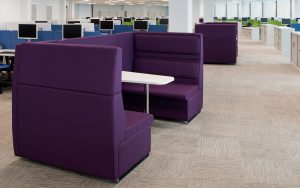
If employees cannot concentrate, their work slows (and some will stay home to escape the noise). In fact, a report from the office pod manufacturer Framery showed that knowledge workers lose two hours per day to noise and interruptions. And on a more intuitive level, if basic ergonomics are ignored (uncomfortable chairs being the classic example) you may see increased health issues or absenteeism, which directly impacts the bottom line. Sure, you can retrofit, but retrofits can cost double or triple what the original design would have.
How to avoid it: Prioritize function from the outset. As you plan the new office, consider daily realities around acoustics (add carpet, acoustic panels, quiet zones), lighting (maximize natural light, quality artificial lighting), thermal comfort, and ergonomics (quality chairs, sit-stand desks). No need to overengineer this solution. Just design for people’s needs, not just for magazine photos.
“Don’t underestimate the ‘basics’ like noise control and lighting. Soundproofed panels in most cases will essentially pay for themselves.”
David Brewster, Commercial Director, Crown Workspace U.K.
5. Skipping change management and having no clear plan for how people will use your new office
Mistake: Treating an office design as purely a build project and failing to plan for the human side of the change: Not explaining the new workspace to employees, not updating policies (for desk use, remote days, etc.) and so on.
Why it’s costly: Even a great design can flop if employees aren’t guided on how to use it. Employees might default to old habits (camping at one desk all day) or avoid unfamiliar areas. That leads to underutilization of new facilities and potential frustration (“Am I allowed to sit here? Is it okay to write on this wall?”). One of the things we always impress on clients is that clear communication needs to continue after the new build too. The cost is all the lost value from features you paid for, but people don’t adopt.
How to avoid it: Treat the office redesign as both a building project and a change management project together. Well before the move-in date, communicate with your teams about what’s changing and why. Explain how new spaces are intended to be used (“This open lounge is for casual huddles or brainstorming; our new focus booths are for quiet work or private calls”). Provide orientation tours or training sessions on using new tools like, say, a desk booking app. A modest upfront effort in change management protects the return on your huge investment in design and fit-out.
That’s a lot to consider.
The good news is that most expensive office design mistakes are generally preventable. By involving employees, focusing on flexibility and choosing function over trend you’ll build something that supports the organization and its bottom line without incurring the hidden costs of wasted space, and unhappy staff. Before design decisions are locked in, it pays to have a conversation with workplace specialists about your goals and assumptions.
Getting started with an office move or entirely new design? Consider reaching out to our team for an early-stage consultation on your upcoming office project, sometimes a brief discussion upfront can save a fortune down the road.
What makes an office green?
Including expert insight on greenwashing and greenhushing in office design and planning, this guide helps workplace leaders embed credible sustainability into built environments and communications.
Beyond greenwashing: What makes an office "sustainable"?
Related stories
Six countries, 1200 respondents: Our new 2025 research survey suggests open-office orthodoxy is making the post-COVID workplace less palatable than ever. What can be done about this?

Hybrid attendance is increasingly concentrated into a few busy days. Planning around those peaks can help organizations use space more effectively without simply adding more desks. At 10:15 on a Wednesday, the office feels full. Every small meeting room is booked, quiet booths are occupied and two teams are trying to find desks near each […]
Over the years, we have learned that some office moves carry risks that most people never think about. A few years back, we relocated the World Wide Fund for Nature (WWF) into new offices over a single weekend. We coordinated the move of over 350 staff, transporting furniture, delicate artifacts, and IT equipment. The artifacts […]

Employers have invested heavily in better offices in recent years. I’m sure you’re familiar with “collaboration zones”, “quiet rooms” and “wellness areas”, to name just a few. However, the pattern of whether these are used looks uneven. Some are in high demand, others often sit empty or unused, especially in a more flexible era like […]