



























Why employees aren’t using the spaces built for them
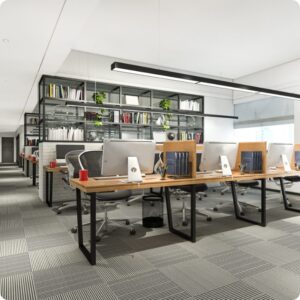 Employers have invested heavily in better offices in recent years. I’m sure you’re familiar with “collaboration zones”, “quiet rooms” and “wellness areas”, to name just a few. However, the pattern of whether these are used looks uneven. Some are in high demand, others often sit empty or unused, especially in a more flexible era like this one.
Does that mean the design was a failure? No. Gallup’s latest tracking shows most remote-capable employees still work in hybrid arrangements, while WFH Research shows office attendance is concentrated in the middle of the week. Uneven office space utilization and hybridity are one and the same at this point.
Is the office offering something people need that day?
This is the most important question! A lot of employees now know they can do certain tasks well at home. Stanford University did research on hybrid work which found that employees working from home two days a week were just as productive and just as likely to be promoted as fully office-based peers, while resignations fell by 33 percent. Add the average commute, which Gallup notes, works out to 230 hours a year, and the office has to offer something more than a nice-looking room.
That is why underused office space is not always a design failure. Sometimes employees make a rational choice. If they can focus better elsewhere, take video calls more easily, or move through the day with less friction at home, they will save the commute for work that feels more collaborative, social, or time sensitive.
Do people understand what space is for?
This is probably the most surprising aspect. Much low workplace utilization comes down to clarity. Microsoft found that “38% of hybrid employees say their biggest challenge is knowing when and why to come into the office.” That same issue often shows up inside the office itself. A room may be well designed, but employees are not sure what it is for, who it is for, or when it makes sense to use it, they tend to fall back on familiar habits.
Picture a new focus room, quiet lounge or hybrid meeting pod. Was it introduced with a clear use case, or was it simply added to the floor plan and left for people to work out? If nobody explains how a space fits into the day, it can feel awkward to claim it.
Does the space fit real work, or “idealized” work?
It is easy to design around an idealized vision of work. It is harder to design around what people do between 9am and 5pm Microsoft has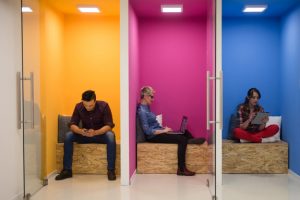 said workplaces need a mix of quiet places, collaboration areas, and touchdown locations. Gallup also reports, in the report referenced above, that some of the biggest challenges in hybrid work are having the right tools and resources to be effective, along with impaired collaboration and disrupted work processes.
Remember employees aren’t going to use space simply because it looks good. They use it when it helps them get something done. If a small room does not feel private enough for a sensitive call, it will go unused. If a collaboration area is attractive but awkward for hybrid meetings, people will avoid it. Office space planning works best when it follows real tasks, not idealized ones.
Is there too much friction built into the experience?
Sometimes the space itself is fine but the problem comes down to practical considerations: Is the room easy to find? Can people tell whether it is free? Does the booking process take too long? Does the screen work the first time? Can someone step in for ten minutes without making it feel like a whole production? These questions sound small, but they shape behavior very quickly.
We’re probably all personally familiar with how this sort of friction can frustrate and turn us off something that, ultimately, might be more productive. Going back to Gallup’s hybrid-work research, employees unsurprisingly value better work-life balance, more efficient use of time and more freedom over when and where they work. So key lesson here: if you’re going to build new amenities and facilities, make them easy to use.
What are team habits telling people to do?
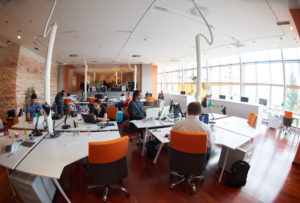
Something people often miss is how work practices are determined by team norms rather than overarching company culture (there’s a big distinction). Suppose a manager books a project room for working sessions, others will follow. If the team always defaults to desk-based calls and quick chats in the aisle, the enclosed spaces nearby may never become routine.
Hybrid patterns have made this obvious. WFH Research found that office attendance is much lower on Mondays and Fridays than it is from Tuesday through Thursday. Stanford has pointed to the same coordination problem in a different way: when employees choose their own days, the middle of the week gets crowded and office space is left underused at the edges. That’s a scheduling problem though, more than anything else.
Do employees trust the experience?
To clarify, do employees trust that they will find a usable space when they need one? Do they trust that a quiet room will be quiet? Or that a hybrid meeting room will include remote colleagues properly? Can they assume using a focus booth, lounge, or well-being room will feel normal, not awkward?
“If a workplace amenity is underused, that does not automatically mean it was a bad investment. Often it means there is a gap between what was designed and how people work. When organizations combine office space utilization data with employee feedback and clear communication, they can see whether the real issue is awareness, trust, timing, or fit.”
Phil Oram, Regional Director, Crown Workspace
There’s not always clear evidence, but notably Gallup in that same report found that U.S. employees feel less clear about expectations and less connected to their organization than they did before the pandemic. CIPD warns that poor communication in hybrid teams creates everything from knowledge gaps to barriers to work, which is not all that surprising to some readers, anecdotally.
How do you improve underused office space without overreacting?
Start with workplace utilization data, booking patterns and occupancy trends are a good place to begin. Think of these as your building blocks. Then put that next to employee feedback and manager insight. Ask some really simple questions: “Who is this space for? What job is it meant to help with?” and, crucially: “what is stopping people from using it?”
Then act on what you learn. Give teams simple guidance on when to use them. Build office norms around shared team days and activities that genuinely benefit from being in person. If the technology isn’t working, then fix it.
To be blunt, sometimes all of this means a space needs to be redesigned. But it might also mean it simply needs better explanation or stronger team habits around it. Facilities Managers and Senior Managers should judge workplaces by whether they support the work that matters.
Don’t let space utilization become yet another tick-boxed line-item in the new fit out!
Are you thinking about upgrading your office space, or simply want an idea of how good your space utilization is? Get in touch with one of our experts today. We combine personal expertise and office moving and design heritage with proprietary technology to create offices that work for people.
What makes an office green?
Including expert insight on greenwashing and greenhushing in office design and planning, this guide helps workplace leaders embed credible sustainability into built environments and communications.
Beyond greenwashing: What makes an office "sustainable"?
Related stories
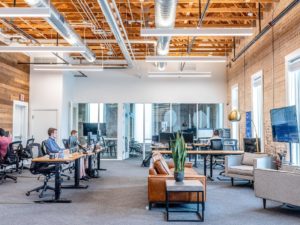
Six countries, 1200 respondents: Our new 2025 research survey suggests open-office orthodoxy is making the post-COVID workplace less palatable than ever. What can be done about this?

Hybrid attendance is increasingly concentrated into a few busy days. Planning around those peaks can help organizations use space more effectively without simply adding more desks. At 10:15 on a Wednesday, the office feels full. Every small meeting room is booked, quiet booths are occupied and two teams are trying to find desks near each […]
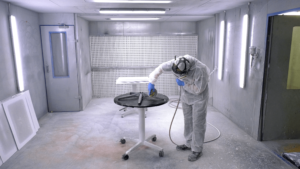
Over the years, we have learned that some office moves carry risks that most people never think about. A few years back, we relocated the World Wide Fund for Nature (WWF) into new offices over a single weekend. We coordinated the move of over 350 staff, transporting furniture, delicate artifacts, and IT equipment. The artifacts […]

Designing a new office is a big project, especially in today’s hybrid-working (and very cost-conscious) environment. This means every design decision needs to deliver real value, or risk leaving expensive space empty. For Facilities Managers and workplace leaders, avoiding costly missteps during an office fit-out or relocation can save significant money and headaches later. So […]