



























Project overview
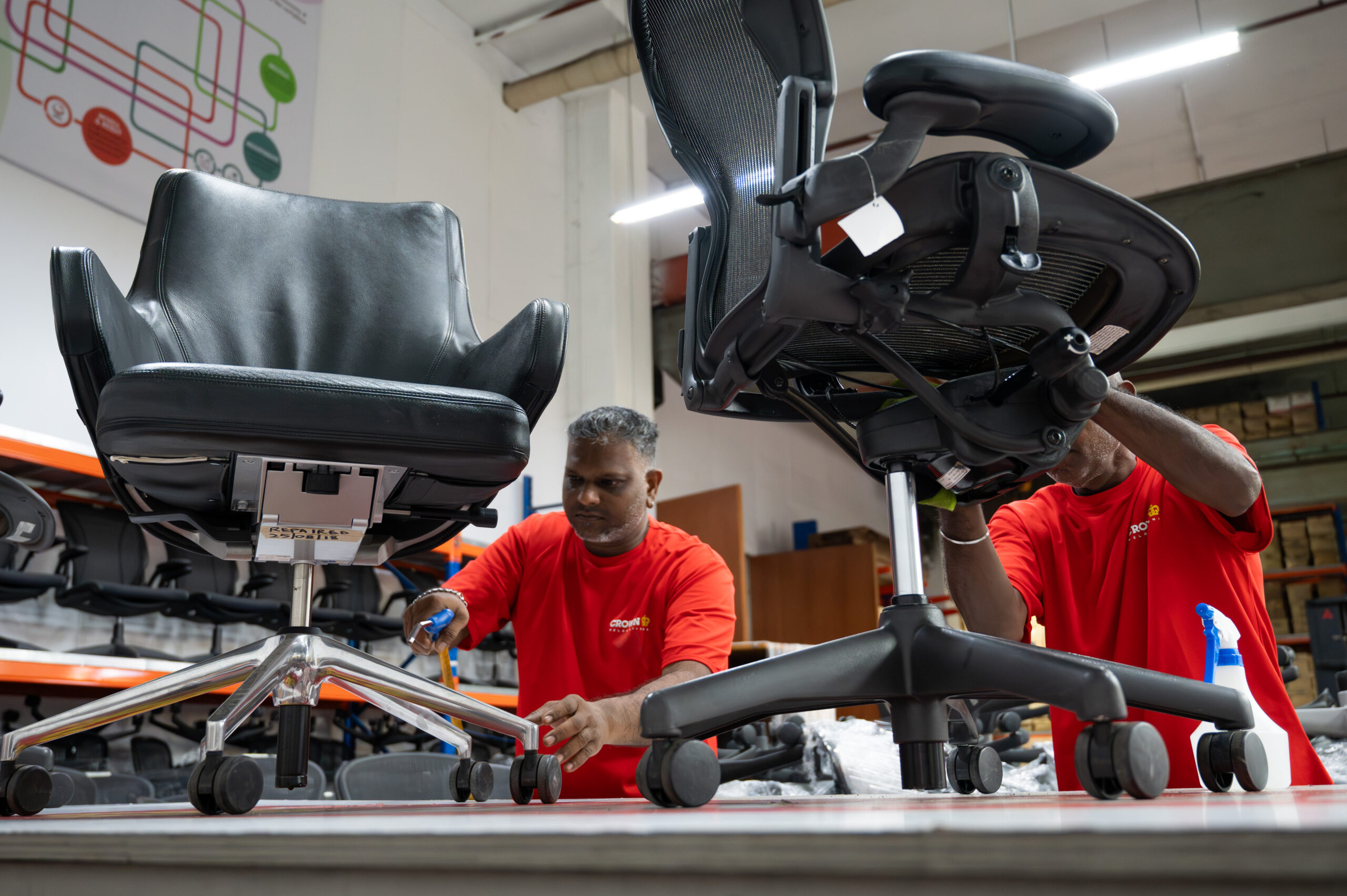
Cardiff University required the refurbishment of a specialist optometry chair whose upholstery had become damaged through continued use. The seat covering showed extensive splitting and deterioration, particularly across the central seating area. Despite its cosmetic condition, the chair remained a specialist asset that could be restored rather than replaced.
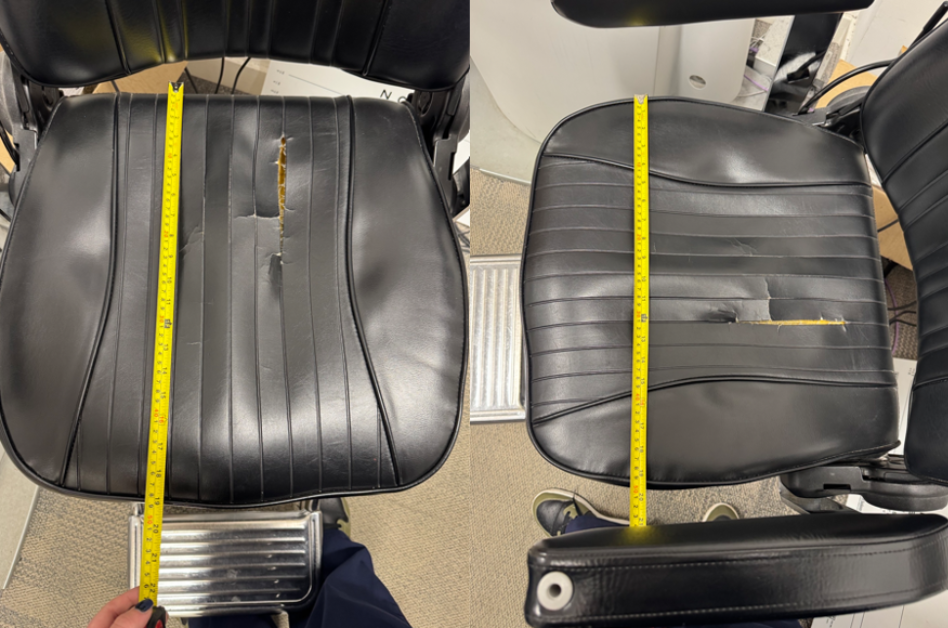
The chair measured:
- Depth: 49 cm
- Width: 50 cm
- Height: 145 cm
The stated height appears to relate to the seat cushion thickness rather than the overall chair height.

Our solution
The chair was carefully repaired and reupholstered to restore its condition and presentation. The renewed finish was selected to complement the chair’s existing black upholstery and preserve its original appearance.
Particular attention was given to maintaining the established design of the chair, including the stitched vertical panels and shaped contours of the seat and backrest. The completed refurbishment produced a consistent finish across the chair while retaining its recognisable specialist configuration.
The result
Following refurbishment, the chair was transformed from a visibly worn asset into a smart, professional piece of specialist furniture suitable for continued use.
The completed chair retained its:
- Distinctive character and original styling
- Adjustable headrest
- Upholstered armrests
- Shaped seat and backrest
- Specialist metal base and footrest
- Black finish with coordinated stitched detailing
The finished photographs show the restored chair with renewed upholstery and a clean, consistent appearance.

Sustainability and value
By repairing and reupholstering the existing chair, Cardiff University was able to retain a specialist asset rather than move directly to replacement. This approach supports a more circular method of furniture management by extending the useful life of existing equipment and reducing the demand for new materials.
The project demonstrates how targeted repair and refurbishment can:
- Extend the working life of specialist furniture
- Improve the appearance of existing assets
- Preserve furniture designed for a specific operational purpose
- Reduce unnecessary disposal
- Support reuse and circular-economy objectives
- Provide a practical alternative to purchasing a replacement
Project outcome
The refurbishment successfully restored the presentation of the specialist optometry chair while preserving its original design and key features. It provides a clear example of how Crown Workspace can help clients unlock further value from existing furniture through considered repair, reupholstery and reuse.