



























Do you talk to your colleagues enough?
In a technological era with smart phones and multiple social media platforms, we are supposed to be more connected than ever.
However is seems that our workplace and business communication are becoming increasingly fragmented.
Silo silence
Specialist expertise within an organisation is a huge benefit but can become an issue, if this expertise isn’t shared. Generally teams end up in their own “silo’s” –where specialist knowledge is stored or locked away from the rest of the organisation.
This negative action can affect productivity and also credibility, if it can be shown that an organisation doesn’t talk to each other regarding business matters.
Many people blame this “silo effect” for the financial crash in 2008, as many people weren’t informed of what others were doing.
It’s a point of view which former Bank of England deputy governor Sir Paul Tucker has some thoughts on:
“There was fragmentation in banks, central banks, universities and in newspapers – where the finance people were in one corner, the economic people in another and perhaps on another floor.
They didn’t know enough about each other’s world; they didn’t care enough about each other’s world. It was incumbent upon us management to connect the dots, and we didn’t do enough of that.
The real challenge is for firms and organisations to embed lessons learnt during the crisis so they don’t get forgotten”.
Consider how much communication you have with your colleagues? Is there space in your diaries to have a monthly catch up with other departments? Another suggestion is to utilise your intranet or internal newsletter to communicate business news to your organisation.
What will the workspaces of tomorrow look like?
Including expert insight on the pros and cons of working from the office vs home, this is an essential guide for those redefining the purpose of workspaces and adapting to hybrid working patterns.
Get the whitepaper now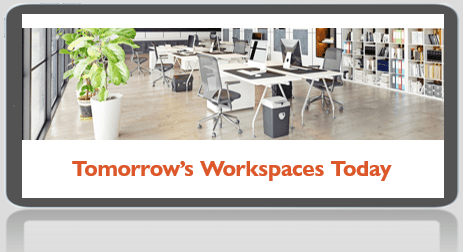
Related stories

We unpick why employee engagement is vital to the success of an office relocation (or any workplace project, for that matter).

Over the years, we have learned that some office moves carry risks that most people never think about. A few years back, we relocated the World Wide Fund for Nature (WWF) into new offices over a single weekend. We coordinated the move of over 350 staff, transporting furniture, delicate artifacts, and IT equipment. The artifacts […]

As a pioneer in circularity, we’ve long understood our responsibility to reduce the environmental impact of our operations and services. The launch of our circular economy framework, aligned with BS ISO 59000 standards, marks a step forward in our journey at Crown UKI, formalising our commitment to embed circularity consistently across all brands.