


























Offices of the future
40 years ago, very few people knew what a computer was. Now an office without a computer is like a car without wheels.
No one could have predicted that we’d have computers that fit on our wrists or voice activated mobile phones.
So what’s in store for the next 40 years?
Bring Your Own Device (BYOD)
Office spaces are constantly changing and adapting. One trend that appeared with the launch of smart phones with email access is the BYOD concept. BYOD can suit the constantly changing office space, with the release of new smart phones and specifically designed laptops. There are a number of benefits of BYOD including the low cost, preferred software and creature comforts that are associated with having a personal laptop/phone at work.
However, there are some negative factors to consider with BYOD. The high costs associated with bringing your own device to work and the security risks of allowing company data to be accessed by a personal device. These disadvantages make many companies decide not to support BYOD. When it becomes more cost efficient and safer to use, we are likely to see the devices of the future commonplace at work.
Evolution of ‘hot desking’
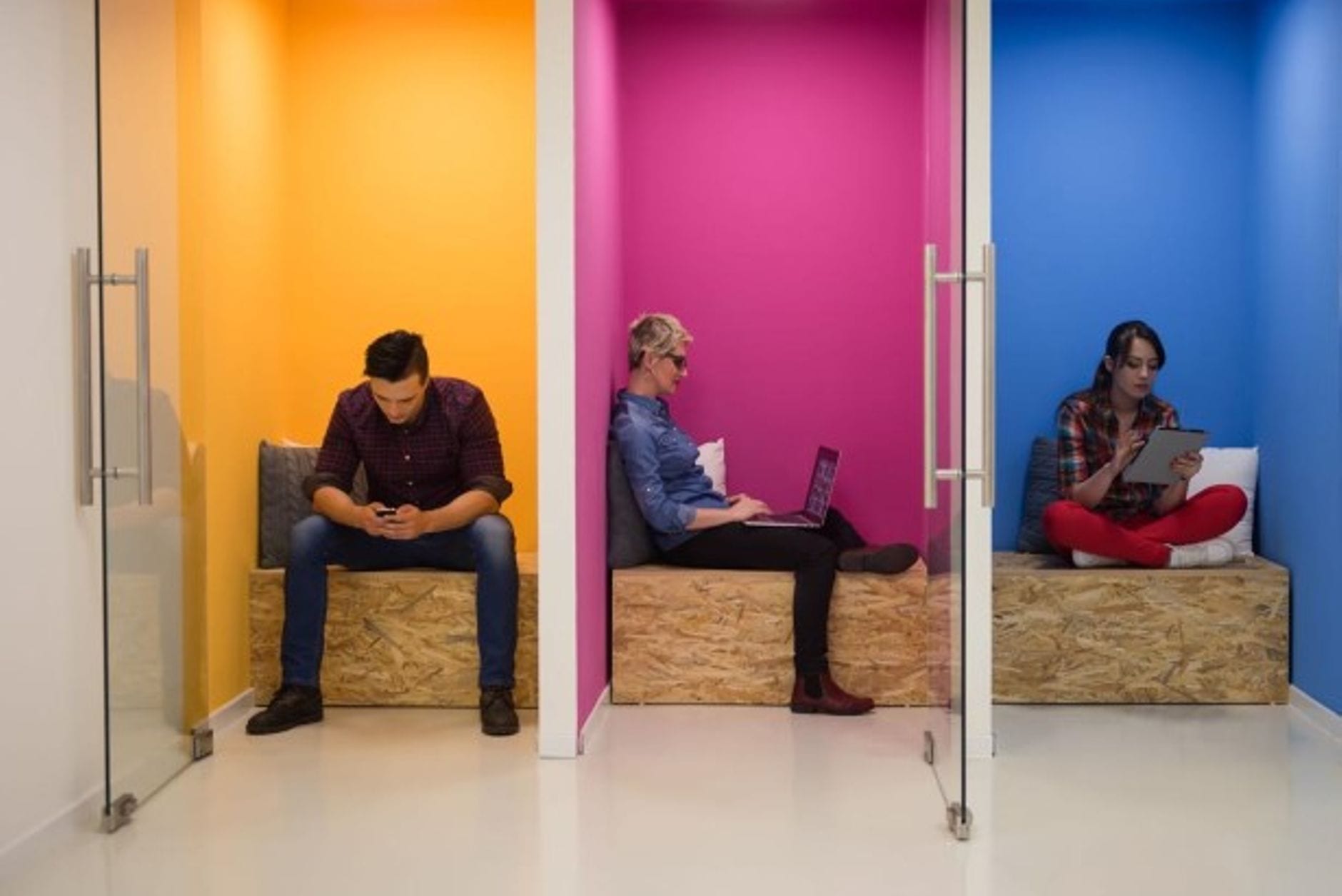
City based office space is an increasing cost, therefore hot desking is becoming a more convenient and cost effective. Crown predicts that in the future, there won’t be any employees with permanent assigned desk. This will save on office space and rental costs. Employees will also have more flexibility working from home (on their own device), and will only visit the office on a casual basis.
Virtual reality (VR) in business
So far VR has mainly been marketed as a tool for gamers, with recent publicity surrounding the ‘Oculus Rift’ (virtual reality headset). One way that VR could be integrated into workplaces is by using it as a personal communication replacing the traditional conference call. The future of VR could also provide; cost efficient training of new employees, a way to see a product in 360 degrees without being present or virtual tours of proposed office spaces.
Currently something like this would be expensive to develop and programme, but in 40 years it could potentially be used as an everyday tool in the business world.
The future of the workplace still remains unknown. It’s hard to predict exactly what can be developed in the span of 40 years but it is safe to say technology is the way forward.
What will the workspaces of tomorrow look like?
Including expert insight on the pros and cons of working from the office vs home, this is an essential guide for those redefining the purpose of workspaces and adapting to hybrid working patterns.
Get the whitepaper now
Related stories

The circular economy is centered around designing out waste and pollution, keeping resources in use for as long as possible and regenerating our natural systems. But how do we translate that to create a ‘circular workplace’? And what does that look and feel like? Whilst every organization will answer that differently, the message is simple […]

How to spot under performing space: Office space is one of the biggest investments most businesses make, yet many workplaces aren’t delivering full value.
In this blog, we delve into seven considerations that are vital to successfully managing an office relocation project, with a special focus on office removal in London: