


























Smart Office Layouts: Designing Workspaces That Work Smarter
Creating the Perfect Office Layout: Why Design Matters for Modern Workspaces
Office layout is more than just a floor plan; it’s a strategic tool that impacts productivity, collaboration, and employee well-being. At Crown Workspace, we believe that a well-planned office design and layout can make the difference between a functional space and an inspiring environment where people thrive.
Why Office Layout Matters
The workplace has changed dramatically. Hybrid schedules , flexible working arrangements, and the need for collaboration have reshaped how businesses utilise their space. A poorly organised office can lead to inefficiencies and low morale, while a well-considered layout creates a dynamic environment that supports both focused work and teamwork, which is essential for effective small office layouts.
Your workspace reflects your company culture. A modern office design and layout signals that you value innovation, comfort, and sustainability qualities that attract talent and impress clients.
But why does this matter so much? Because your environment directly impacts how people feel and perform. Research indicates that employees working in well-designed spaces are more engaged, creative, and productive. In short, your office isn’t just a place to work, it’s a strategic asset.
What Are the Different Types of Office Layouts?
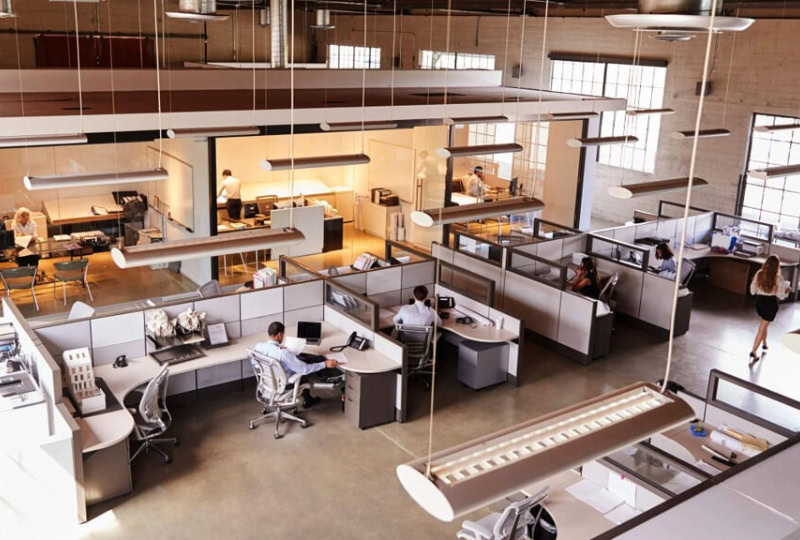
Office layouts play a big role in how people work, collaborate and feel within a workplace. Choosing the right setup can improve productivity, support your team’s routines and even make better use of space. Here are the most common types of office layouts used today:
- Open Office Layout
A spacious, barrier-free setup designed to encourage communication and teamwork. It’s flexible and cost-efficient, though it may create noise or distractions for focus-heavy roles. - Low-Partition Office Layout
Workstations are divided by low panels or screens, giving employees a sense of personal space while still maintaining visibility and openness. It helps reduce noise slightly without sacrificing collaboration. - Cubicle Layout
Individual workspaces separated by higher partitions. This layout provides privacy and reduces interruptions, making it ideal for tasks that require concentration, calls or sensitive work. - Private Office Layout
Enclosed rooms for individuals or small teams. This setup is suited for managers or roles needing confidentiality, deeper focus and frequent meetings. It requires more space but provides maximum privacy. - Team-Based or Cluster Layout
Desks are grouped according to departments or project teams. This improves communication within groups and is helpful for organisations with highly collaborative workflows. - Activity-Based Layout
The office is divided into zones for different types of work—focus rooms, meeting areas, brainstorming corners, and social spaces. It supports flexibility and allows people to choose a space that suits their task. - Co-Working or Hot-Desking Layout
Employees don’t have fixed desks. Instead, they choose where to sit each day. This is ideal for hybrid or mobile teams and helps maximise space efficiency.
Key Principles of Effective Office Design and Layout
When planning your office, consider these essential elements:
- Flexibility for hybrid work – modern businesses need adaptable spaces. Modular furniture, movable partitions, and multi-purpose areas allow you to reconfigure your office layout as needs change.
- Ergonomics and Comfort – employee health should be a priority. Ergonomic chairs, adjustable desks, and proper lighting create a workspace that supports physical well-being.
- Technology integration – seamless connectivity is vital. Your office design and layout should incorporate a charging station, video conferencing facilities, and smart tech solutions to keep teams connected.
- Sustainability – renewable material, energy-efficient lighting, and recycling stations demonstrate your commitment to the environment while reducing operational costs.
The Impact of Office Layout on Productivity and Culture
A well-planned workspace shapes how people work and interact. Open areas encourage collaboration, while quiet zones support deep focus. Breakout spaces spark creativity and informal conversations, helping teams build stronger connections and share ideas more freely.

The physical environment also affects mental health. Natural light, greenery, and calming colour schemes reduce stress and boost mood. When employees feel comfortable and inspired, engagement and performance rise significantly. A thoughtfully designed office doesn’t just improve workflow; it fosters a sense of belonging and pride. This emotional connection strengthens company culture, making employees more motivated and invested in the organisation’s success.
Common Mistakes to Avoid
Even with the best intentions, businesses often make critical mistakes when designing their workspace. Avoiding these pitfalls can save time, money, and frustration later.
- Ignoring Employee Input – Your team knows what works and what doesn’t. Failing to involve employees in the planning process can lead to dissatisfaction and underutilised spaces. Conduct surveys or workshops to gather feedback on what employees need, whether it’s quiet zones, collaborative areas, or better storage. Their insights will help you create a layout that truly supports productivity.
- Overloading Open Spaces – Open-plan offices are popular for encouraging collaboration, but too much openness can backfire. Without designated quiet zones, employees may struggle to concentrate, leading to stress and reduced efficiency. Balance is key: combine open areas with private rooms or acoustic pods for focused work.
- Neglecting Storage – Clutter kills productivity and creates a chaotic environment. Many businesses underestimate how much storage they need for documents, equipment, and personal items. Incorporate built-in cabinets, lockers, and smart storage solutions into your design to keep the workspace organised and visually appealing.
- Overlooking Technology Integration – Technology is the backbone of modern work, yet it’s often treated as an afterthought. Poorly placed power outlets, weak Wi-Fi zones, and inadequate video conferencing setups can disrupt workflow. Ensure your layout supports seamless connectivity and integrates tech into the design from the start.
- Ignoring Well-being Factor – Lighting, air quality, and acoustics significantly impact employee health and morale. Overlooking these elements can lead to fatigue, stress, and disengagement. Incorporate natural light, greenery, and sound-absorbing materials to create a comfortable, inspiring environment.
How We Can Help
At Crown Workspace, we create tailored solutions that align with your business goals. Whether you’re relocating, redesigning, office refurbishment or adapting to hybrid work, our team guides you from planning to implementation.
We focus on functionality, sustainability, and employee experience, ensuring your office supports productivity and reflects your brand identity. Our experts consider every detail, from ergonomic furniture to tech integration, so your workspace works as hard as you do.
What will the workspaces of tomorrow look like?
Including expert insight on the pros and cons of working from the office vs home, this is an essential guide for those redefining the purpose of workspaces and adapting to hybrid working patterns.
Get the whitepaper now
Related stories

Read our latest blog on why employees hate office relocation and how you can improve morale, reduce disruption, and plan a smoother office move with better communication!

Poorly planned moves or workspace transitions can lead to downtime, lost productivity, and unnecessary stress for both leadership teams and employees. Read our full blog to find out more!

The circular economy is centered around designing out waste and pollution, keeping resources in use for as long as possible and regenerating our natural systems. But how do we translate that to create a ‘circular workplace’? And what does that look and feel like?