



























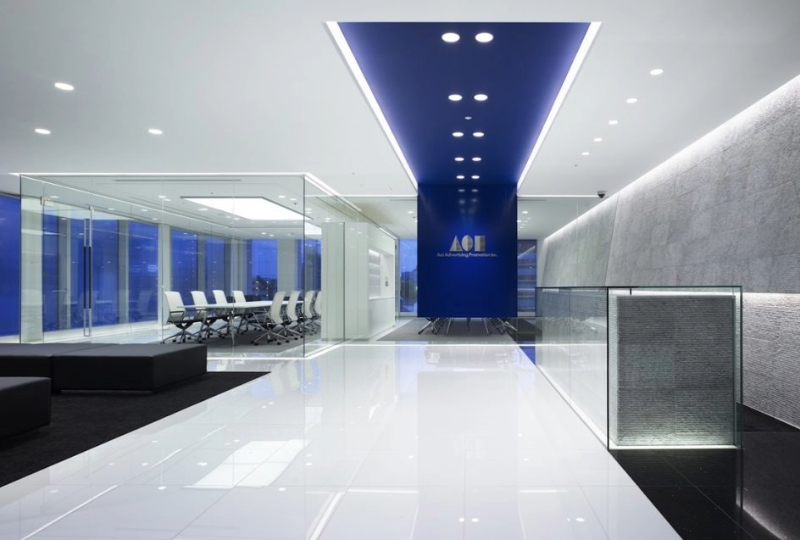
A new office isn’t always a successful one. Why?
We’ve already discussed what happens when you ignore your employees, but how do you know if your new office is a success?
A pristine new office can, bluntly, be an enormous waste of money. It can deliver lower attendance than anticipated, feature worse space utilization, more noise complaints, higher running costs and fundamentally: make it harder for employees to do their jobs than the previous office. If the project did not meet its main business objective, whether that was attendance, collaboration, focus, cost control, business continuity, or sustainability, then the capital spend has, simply, not paid off.
This is an increasingly acute problem because, with hybridity now normalized, offices need to earn their keep more than ever before. Gallup’s Hybrid Work indicator shows that 52% of employees in remote-capable jobs are hybrid and 22% are fully on-site. The office no longer wins by default. It has to give people a reason to travel, and it has to make their working life easier than it would be at home.
| “Six in 10 employees with remote-capable jobs want a hybrid work arrangement.”
Source: Gallup |
Our own research points in the same direction. In our open-office report, 77% of respondents ranked individual work areas as the most important aspect of office working, and 91% said changes to the environment could encourage them to spend more time in the office. That is a useful correction to generic design thinking. The question is not whether the office looks current. The question is whether it supports the work people need to do.
What was the office meant to do?
This is the first, most basic and most important question. It would probably surprise many employees that many senior leaders don’t have a clear objective in mind when agreeing to the outlay.
Some businesses need better space for client-facing work. Some want to raise attendance. Some need stronger support for focused work. Some need better collaboration around projects. Some are trying to shrink their footprint without damaging experience. Others want to cut running costs or prove that sustainability claims are backed by evidence (“Greenwashing” is something we’ve explored before).
Our office relocation guidance always starts with clear success criteria derived from decades of experience.
If the goal is higher attendance, set a target. If the goal is better collaboration; measure meeting-room use, occupancy of your new collaboration spaces and, often overlooked, booking no-show rates . If the goal is better focus: track complaints, satisfaction scores, and how often quiet settings are actually used. If the goal is lower cost; measure cost per desk, cost per square foot, and post-move operating costs. If the goal is sustainability; measure energy, waste, reuse, and embodied carbon.
This might seem exhaustive, but serious investments should be accompanied by serious metrics.
| “Post-occupancy evaluation can maximize building performance and user-friendliness.”
Source: RIBA |
What should success look like in numbers?
Any useful framework is two things, both simple and rigorous.
- Utilization: average attendance, peak occupancy, desk use, meeting-room demand, and no-show rates.
- Employee experience: survey scores on focus, collaboration, comfort, and technology.
- Business continuity: downtime hours, service interruptions, unresolved IT tickets, and day-one readiness.
- Financial performance: project variance, cost per seat, cost per square foot, and changes in operating cost.
- Environmental performance: energy use intensity, reuse rates, waste diversion, and emissions.
The problem is that many organizations still do not evaluate office performance this way. A 2024 Journal of Building Engineering review found that there is no dominant post-occupancy protocol for offices, and that performance is “still measured inconsistently”. Weak evaluation is, surprisingly, still very commonplace.
| “Productivity or performance was evaluated in only 1/3 of the studies.” |
That gap matters because office performance is not one thing. It may mean space utilization, yes, but it can also mean onboarding quality, meeting-room availability, noise complaints, incident tickets, AV reliability, attendance patterns, employee sentiment, customer impression, or team effectiveness. The right measures depend on the brief. The point is to choose them early, then come back after move-in and test them honestly.
Can you prove the office works after move-in?
This is where a serious project is different from a cosmetic exercise. As soon as the project is complete, it should be the start of a 30, 90, and 180-day review cycle. Are people using the space as intended? Has attendance improved? Are quiet areas solving the focus problem? Are collaboration zones supporting real project work or just absorbing space? Did the move protect service delivery, or did friction simply move to a new floorplate?

The sustainability side needs the same discipline. In our sustainable workplace research, 97% of companies said they had at least one sustainability initiative in place, but only 59% of facilities managers ranked sustainability as a strategic priority, and fewer could show evidence of lower energy use, reduced waste, or lower emissions. That gap matters because the U.S. EPA’s ENERGY STAR program says that “often up to 30 percent or more” of building energy is wasted through inefficiencies, while ENERGY STAR certified buildings use 35% less energy than their peers. If an office claims to be more efficient, the obvious follow-up question is where the measured improvement is.
Measurement also means credibility. If the office was meant to reduce waste, then show reuse rates. If it was meant to lower energy use, show the change in consumption and operating cost. If it was meant to improve experience, show the change in survey scores, attendance, and complaints. Numbers survive scrutiny, rhetoric does not.
The supplier matters from the very beginning
 Even a sound workplace strategy can be weakened by, as we’ve discussed before, unclear accountability, weak communications or day-one disruption. Our own guidance is direct on this point: a move touches facilities, HR, IT, finance, communications, furniture, storage, and often sustainability too. That is a long chain of dependencies, it’s not just a matter of moving furniture and putting up some soundproofing. If the logistics partner is weak, you’ll suffer for it in the long run.
That is why a dependable supplier matters. The right partner be working with you on the brief, identifying risks they’ve seen from prior work, setting up the sequencing for the move, protecting IT continuity and make sure the design intent is followed through on. If they’re just moving and delivering assets, you’re essentially on your own. Our workplace consultancy process starts with consultation and data collection for exactly that reason.
| “Most businesses are already sitting on a treasure trove of information” about their people and buildings.
Source: World Green Building Council |
This is also where underperformance often starts. Design intent gets diluted. IT cutover becomes reactive. Reuse and circularity get left too late. Post-move support is treated as optional (the post-move support is as crucial as the brief support). Then the business loses the chance to prove whether the new office improved anything.
“Too often success is judged at handover, not in operation. A workplace project only really succeeds if it delivers against the business case it was built on and if you can evidence that through real measures once people are using the space.”
David Brewster, Commercial Director, Crown Workspace
A successful office is a business result, not a photo opportunity
Your new office can still underperform, or perform even worse than the one it replaced. The simplest measure here is the most profound, if it didn’t achieve its objectives in a clear, recordable way, then it failed.
A successful office is not defined by flashy photography or vague ideas about “sentiment”. It lives or dies on whether it met the business case and whether the evidence still holds after people move in. That is a more demanding standard, but it is the only serious one.
For facilities leaders, workplace leaders, operations teams, and senior sponsors planning a move, fit-out, or workplace reset, the real question is simple: what should success look like in numbers, and who is helping you define it, deliver it, and prove it? If that answer is still vague, why not get in touch before the project starts?
What will the workspaces of tomorrow look like?
Including expert insight on the pros and cons of working from the office vs home, this is an essential guide for those redefining the purpose of workspaces and adapting to hybrid working patterns.
Get the whitepaper now
Related stories

We unpick why employee engagement is vital to the success of an office relocation (or any workplace project, for that matter).
Over the years, we have learned that some office moves carry risks that most people never think about. A few years back, we relocated the World Wide Fund for Nature (WWF) into new offices over a single weekend. We coordinated the move of over 350 staff, transporting furniture, delicate artifacts, and IT equipment. The artifacts […]

As a pioneer in circularity, we’ve long understood our responsibility to reduce the environmental impact of our operations and services. The launch of our circular economy framework, aligned with BS ISO 59000 standards, marks a step forward in our journey at Crown UKI, formalising our commitment to embed circularity consistently across all brands.